Required properties
Require specific fields at each pipeline stage and add stage descriptions, so deals advance with the context your team and agents need.
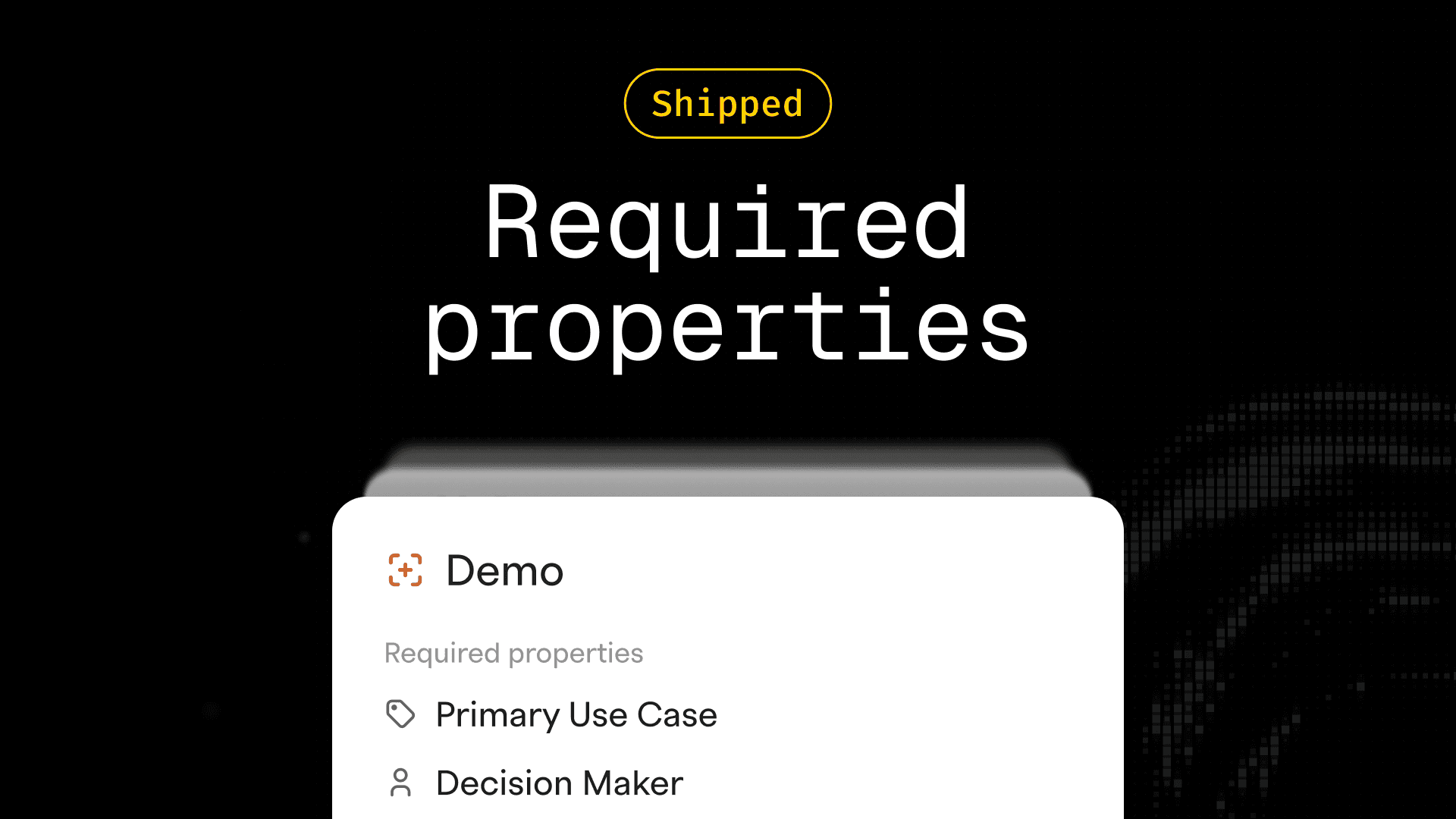
Required properties per pipeline stage
Define what "qualified" actually means. The fields that matter, enforced at the right moment in the deal.
What's new:
You can now mark properties as required at specific stages of a pipeline. Deals can't advance until those fields are filled in. You can also add a description to each stage, so your reps and your agents both understand what each stage actually means at your company.
This turns your pipeline from a loose set of labels into a structured process that captures the data you need, when you need it.
Key improvements include:
Required properties per stage
For every stage in a pipeline, you can specify which properties must be filled before a deal can move forward. The fields you need at "Qualified" are different from the ones you need at "Proposal Sent" or "Closed Won", and now your pipeline enforces that.
Examples:
At Qualified: budget, decision maker, and use case must be filled
- At Demo Scheduled: demo date and attendees required
- At Proposal Sent: deal value, contract term, and primary contact required
- At Closed Won: start date, ARR, and signed contract attachment required
If a rep tries to move a deal forward without the required fields, Zero flags what's missing.
Stage descriptions:
Each stage can now include a description that explains what it means in practice. No more "what does 'qualified' actually mean here" debates in pipeline reviews.
Use them to capture the criteria that distinguish one stage from another:
- Qualified: "Budget confirmed, decision maker identified, clear use case for our product."
- Negotiation: "Pricing under review with procurement or legal."
- Closed Lost: "Decision made against us. Loss reason captured."
Descriptions are visible to anyone working in the pipeline, and feed directly into the context your agents rely on.
Why this matters
Pipelines only work if everyone agrees on what each stage means. When stages are vague, deals get pushed forward based on optimism instead of evidence, forecasts drift, and reviews turn into guessing games.
Required properties make sure the right information is captured at the right moment. Stage descriptions make sure the whole team, and every agent acting on your behalf, understands what each stage represents.
The result is a pipeline that reflects reality, forecasts you can trust, and a CRM that actively helps your team move deals forward instead of just storing them.